
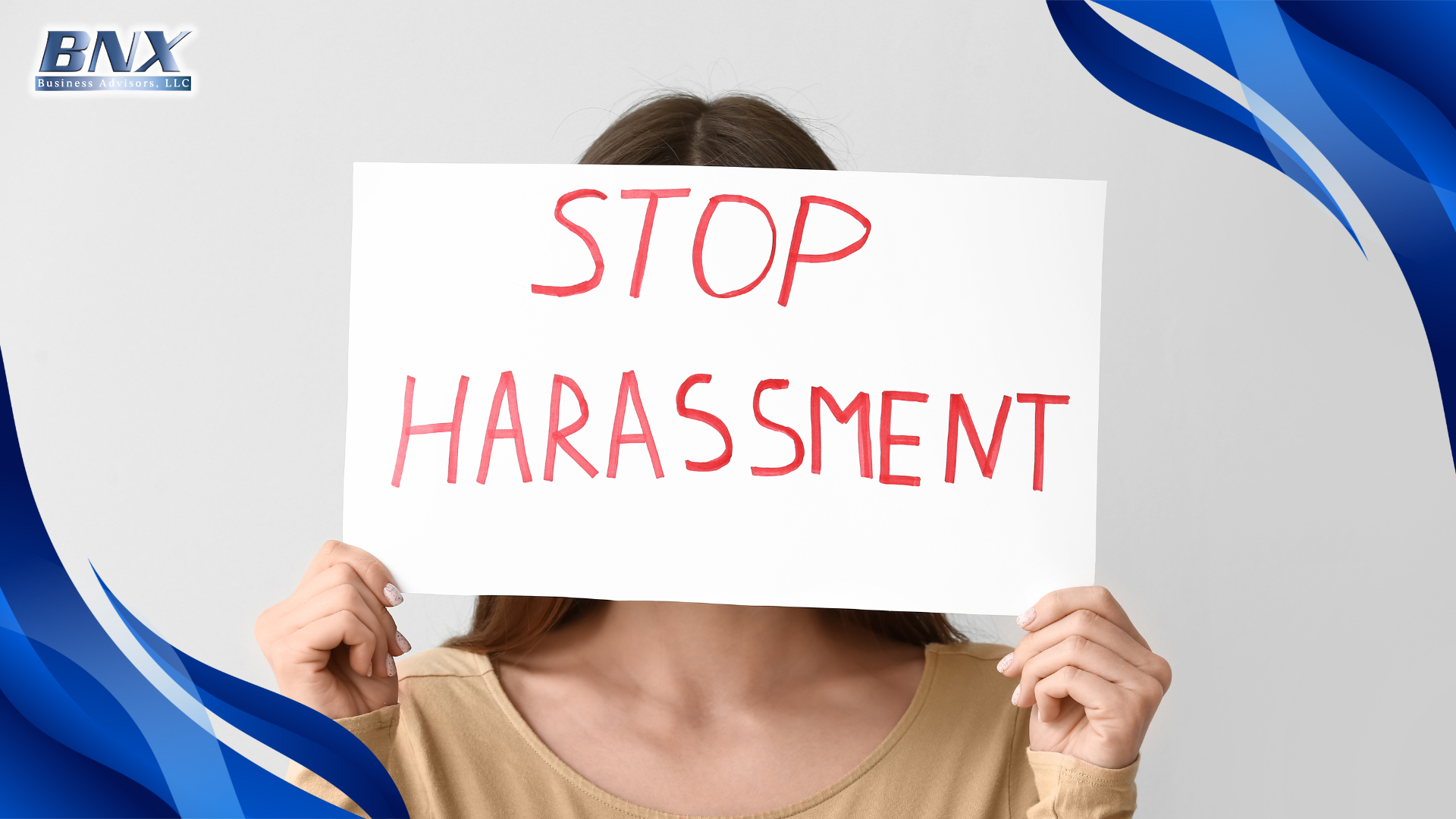
Sexual Harassment Employer Responsibility is no longer a passive compliance topic—it is a leadership obligation that determines an organization’s stability, credibility, and workforce reputation. Sexual Harassment Employer Responsibility requires employers to actively prevent harassment, educate their workforce, support reporting, respond to complaints, document decisions, and enforce accountability across the entire organization.
At BNX Business Advisors, we work with executives, government agencies, corporate leaders, and mid-sized companies who want more than legal protection—they want cultural transformation. Today’s employees expect safe environments, transparent processes, and ethical leadership. Employers who fail to deliver are facing costly turnover, staggering legal risk, damaged brand reputation, and operational collapse.
This blog explains the employer responsibilities that matter most, why the stakes are higher now, and how BNX helps organizations build cultures that protect people and profit simultaneously.

Table of Contents
Why Employer Responsibility Matters
Sexual harassment prevention is not achieved through policies alone. Having a handbook, a paragraph in orientation, or a poster in the break room does not fulfill employer obligation.
Responsibility is measured through:
- leadership action
- behavioral modeling
- complaint response
- training consistency
- investigation accuracy
- documentation discipline
- culture management
Companies that misunderstand this suffer major consequences—from lawsuits to workforce disengagement to public crisis.
BNX guides organizations through real-world strategies to institutionalize harassment prevention as a core business standard.
1. Employers Must Provide Comprehensive Sexual Harassment Training
Training is the most important and visible form of employer responsibility.
It must be:
- state-compliant
- interactive
- documented
- role-specific
- recurring
States like California, New York, Maine, Delaware, Connecticut, and Illinois require mandatory training by law.
Employers who fail to conduct training:
- lose insurance protections
- lose legal credibility
- lose workforce trust
BNX offers tailored, state-compliant training programs that meet legal standards and improve workplace culture.
2. Employers Must Maintain a Clear, Enforced Harassment Policy
Policies should not be vague or generic. They must define:
- what sexual harassment is
- what sexual harassment is not
- reporting channels
- confidentiality boundaries
- anti-retaliation protections
- disciplinary actions
A policy that employees never read is worthless.
A policy that managers ignore is dangerous.
BNX assists organizations in rewriting policies that align with their culture, workforce structure, and state laws.
3. Employers Must Train Leadership Differently From Employees
Managers carry separate obligations.
They must understand:
- how to respond to complaints
- what language to avoid
- how to prevent retaliation
- how to escalate reports
- when to involve HR
- how to protect confidentiality
Leadership accountability is the foundation of organizational culture.
BNX offers leadership-specific training to prepare managers to prevent risk—not trigger it.
4. Employers Must Respond to Complaints Immediately
Slow response = legal liability.
Employers must establish:
- intake timelines
- communication logs
- structured investigation steps
When reports go unanswered, the court interprets it as negligence.
BNX helps employers build internal pathways where every report is tracked, recorded, reviewed, and verified.
5. Employers Must Protect Employees From Retaliation
Retaliation is one of the most common EEOC findings nationwide.
Retaliation may include:
- demotion
- isolation
- schedule changes
- blame
- gossip
- performance pressure
- reduced opportunities
Protecting employees from retaliation is not optional.
BNX provides structures that track employment decisions and ensure fairness.
6. Employers Must Maintain Professional Workplace Conduct and Accountability
Responsibility is useless without enforcement.
Companies must:
- discipline offenders consistently
- remove toxic influences
- model respectful interaction
- build behavior expectations
Many employers avoid disciplining high-performing harassers out of fear of losing a “talented” employee.
But the truth is simple:
keeping a harasser destroys entire teams.
BNX culture programs help organizations eliminate favoritism and bias.
7. Employers Must Document Everything
Documentation is the employer’s legal shield.
Necessary records include:
- training attendance logs
- signed policy acknowledgments
- investigation notes
- communication trails
- interview summaries
- corrective action forms
- witness statements
Documentation proves professionalism.
BNX provides templates and structure to solidify investigative validity.
8. Employers Must Model Ethical Leadership
Employer responsibility is not about rules—it is about example.
If leadership tolerates sexual jokes, innuendos, texts, touching, or intimidation, employees will follow the same behavioral patterns.
Workplace culture flows downward.
BNX client organizations learn to embrace leadership ethics that improve morale, engagement, productivity, and loyalty.
Why Employer Responsibility Is Rising Nationwide
The legal and cultural landscape has evolved.
Today’s workplace includes:
- stronger anti-harassment laws
- higher employee expectations
- increased social media scrutiny
- hybrid and remote workforce challenges
- complex third-party relationships
- multigenerational communication needs
Employees know their rights.
They expect safety.
They expect respect.
They expect accountability.
Organizations that ignore this are falling behind.
BNX helps employers modernize systems to reflect these realities.
The BNX Employer Responsibility Framework
BNX Business Advisors created a strategic harassment prevention model based on three pillars companies must master:
Prevention
Comprehensive training that teaches:
- harassment definitions
- reporting structure
- bystander responsibility
- documentation methods
Intervention
Structured leadership response through:
- investigation process
- incident management
- corrective discipline
- retaliation prevention
Culture
Accountability systems that:
- reinforce respectful behavior
- reward ethics
- improve communication
- empower leadership teams
BNX provides more than training—we create operational systems that change performance outcomes.
What Happens When Employer Responsibility Is Ignored
Ignoring sexual harassment responsibility produces predictable failure:
- lawsuits
- employee turnover
- psychological harm
- productivity loss
- customer distrust
- leadership collapse
- brand damage
- public scandal
The financial investment to correct culture damage is far higher than the investment required to prevent harassment.
BNX training programs are designed to minimize risk, improve compliance posture, and strengthen trust inside organizations.
BNX: The Partner Employers Trust
BNX Business Advisors offers harassment prevention training built around:
- federal compliance
- state requirements
- organizational culture
- leadership accountability
We train employers to operate at a higher standard—one that employees trust and regulators respect.
BNX programs are used by:
- corporations
- school districts
- small businesses
- government agencies
- hospitals
- hospitality companies
- tech firms
- manufacturers
- nonprofit organizations
Whether your team has 10 employees or 10,000, BNX builds solutions that scale.
Employer Responsibility Is Not Optional. It Is Strategic Leadership
Sexual harassment prevention is a business priority that protects:
- financial stability
- cultural strength
- employee safety
- operational consistency
- leadership credibility
Employers who embrace accountability build the workplaces people want to be part of—and people stay where they are respected.
BNX Business Advisors provides the training, tools, frameworks, and cultural guidance to help organizations meet every employer responsibility—while improving profit, retention, and performance.
To request BNX sexual harassment training, consulting, or program outsourcing support, contact us at our website.
FAQs About Sexual Harassment Employer Responsibility
1. Who is responsible for preventing harassment—the employer or HR?
The employer. HR supports responsibility, but leadership owns outcome.
2. Do employers need to investigate every harassment complaint?
Yes. Every report must be documented, reviewed, and validated.
3. Are managers required to report harassment even without employee consent?
Yes. Silence increases liability.
4. Does employer responsibility include remote workers?
Yes. Virtual harassment counts as workplace harassment.
5. What if employees say they feel uncomfortable, but no violation is proven?
Employers must still investigate and support, because discomfort signals early cultural breakdown.