

Proactive Risk Reduction in Assessment Offices is the defining difference between offices that manage scrutiny calmly and those that respond under pressure.
Most assessment offices do not encounter risk through a single dramatic event. Exposure accumulates quietly through repeat questions, unclear explanations, inconsistent documentation, or patterns that surface during appeals or reviews. By the time issues escalate, options narrow and defensiveness increases.
At BNX, we work with assessment leadership focused on defensibility, consistency, and credibility. What effective supervisors consistently demonstrate is not reactive correction, but proactive risk reduction—addressing vulnerability upstream, before it becomes a formal issue.
This approach is not about blame. It is about leadership.
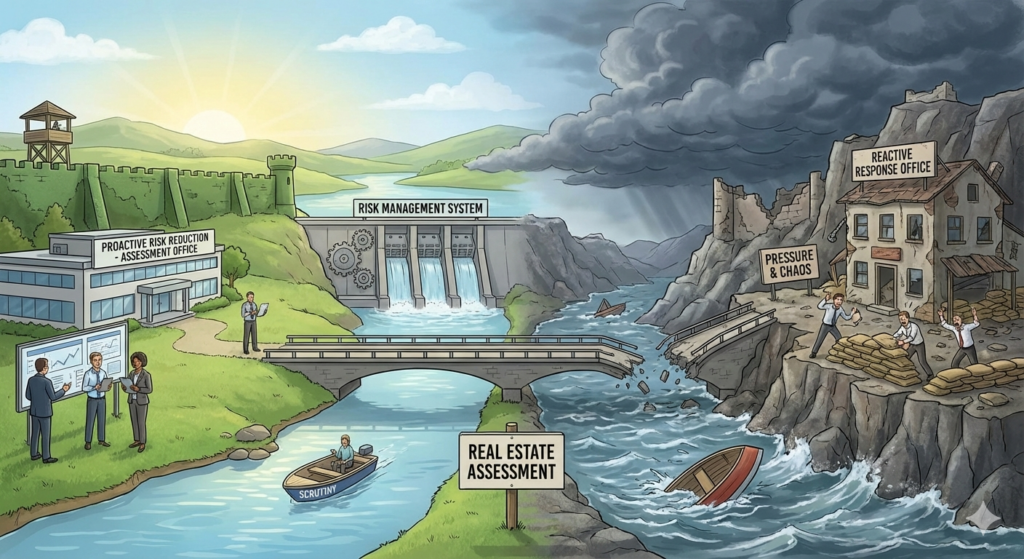
Table of Contents
Proactive Risk Reduction in Assessment Offices Starts with Pattern Recognition
Strong supervisors do not wait for formal complaints to identify risk.
They look for patterns such as:
- Similar questions arising across multiple cases
- Inconsistent explanation styles among staff
- Repeated requests for clarification during reviews
- Documentation that varies significantly by assessor
These patterns rarely signal misconduct. They signal process variation.
Proactive risk reduction in assessment offices begins when supervisors treat patterns as early indicators rather than isolated events.
Proactive Risk Reduction in Assessment Offices Requires Standardizing Decision Logic Without Limiting Judgment
Professional judgment is essential in assessment work. Risk increases, however, when judgment is applied without shared structure.
Effective supervisors:
- Establish common decision frameworks
- Clarify how adjustments should be explained
- Align staff on when additional documentation is required
- Create reference points for similar property scenarios
Proactive risk reduction in assessment offices does not eliminate discretion. It ensures discretion is explainable and consistent.
Standardization protects assessors by making their reasoning visible and defensible.
Proactive Risk Reduction in Assessment Offices Includes Coaching, Not Just Oversight
Supervisors who reduce risk most effectively act as coaches, not just reviewers.
They focus on:
- Improving explanation quality before files are finalized
- Helping assessors articulate the “why” behind decisions
- Reinforcing documentation expectations through feedback
- Addressing gaps early, when correction is easiest
This coaching approach reduces defensiveness and builds competence over time.
Proactive risk reduction in assessment offices works best when learning is embedded into daily practice rather than reserved for corrective moments.
Proactive Risk Reduction in Assessment Offices Depends on Shared Language Around Defensibility
Defensibility cannot be assumed. It must be defined.
Strong supervisors create shared language around:
- What makes a valuation defensible
- How explanation quality is evaluated
- What consistency looks like across cases
- How documentation supports professional judgment
Without shared language, expectations vary and vulnerability increases.
Proactive risk reduction in assessment offices improves when teams use common terms and frameworks to describe defensible practices.
Proactive Risk Reduction in Assessment Offices Treats Bias Risk as a Process Issue
Bias risk is often misunderstood as an accusation. This framing shuts down productive conversation.
Effective leaders take a different approach.
They treat bias risk as:
- A process consideration
- A consistency challenge
- An explanation and documentation issue
- A leadership responsibility
By framing bias risk as procedural rather than personal, supervisors reduce defensiveness and encourage engagement.
Proactive risk reduction in assessment offices succeeds when staff feel supported, not scrutinized.
Proactive Risk Reduction in Assessment Offices Is Preventive, Not Reactive
Reactive correction focuses on fixing what already escalated. Preventive leadership focuses on reducing the likelihood of escalation in the first place.
Supervisors who lead preventively:
- Address small gaps before they repeat
- Strengthen processes between appeal cycles
- Reinforce expectations consistently
- Build resilience into systems, not just responses
Proactive risk reduction in assessment offices saves time, protects credibility, and reduces stress for everyone involved.
Proactive Risk Reduction in Assessment Offices Protects Both Staff and the Organization
The goal of proactive risk reduction is not perfection. It is protection.
When supervisors invest in consistent processes and clear explanations:
- Assessors are less exposed during reviews
- Leadership is better prepared for scrutiny
- Appeals are easier to defend
- Trust is strengthened internally and externally
Strong processes protect people.
How BNX Supports Proactive Risk Reduction in Assessment Offices
BNX works with assessment leadership to strengthen defensibility without criticism or disruption.
Our work focuses on:
- Identifying procedural vulnerability before escalation
- Supporting supervisors with neutral, practical frameworks
- Strengthening consistency, explanation quality, and documentation
- Reinforcing leadership practices that reduce repeat issues
We’ve been supporting supervisors with a concise brief designed to strengthen consistency and documentation proactively, not replace internal processes. It is intended as a leadership resource that can be shared internally to support risk reduction.
Proactive Risk Reduction in Assessment Offices Is a Leadership Choice
Offices that manage scrutiny well do not wait for issues to force change. They invest early, quietly, and intentionally.
Proactive risk reduction in assessment offices is not about compliance. It is about leadership maturity and operational discipline.
When risk is addressed upstream, escalation becomes the exception—not the norm.
Frequently Asked Questions
What does proactive risk reduction mean in assessment offices?
It refers to leadership actions taken early to reduce procedural vulnerability before appeals, complaints, or reviews escalate.
Is proactive risk reduction about correcting assessors?
No. It focuses on strengthening systems, consistency, and explanation quality to protect assessors and the organization.
How do supervisors identify early risk patterns?
By monitoring repeat questions, documentation gaps, and variation across similar cases.
Why is shared language around defensibility important?
It aligns expectations and reduces inconsistency, making decisions easier to explain and defend.
How does BNX support proactive leadership in assessment offices?
BNX provides neutral, leadership-focused tools and frameworks that strengthen defensibility and reduce escalation risk.
Strengthen Protection Before Scrutiny
If you are a supervisor or leader focused on reducing repeat issues, improving defensibility, and protecting your office from unnecessary escalation, BNX can support your efforts.
We help assessment leadership:
- Strengthen proactive risk reduction practices
- Improve explanation quality and documentation consistency
- Equip supervisors with practical, neutral leadership tools
If you’d like to review the supervisor-focused brief we’ve been sharing or explore how BNX supports proactive leadership in assessment offices, we welcome the conversation.
Prevention is quieter than correction—and far more effective.